An app for on-call firefighters that shows who is coming, on which appliance, and with what kit.
On-call (retained) fire stations run on a pager, a crew WhatsApp group and a whiteboard in the appliance bay. Sinkaos puts the crew, the appliances, the equipment and the incident itself on one map that works offline and leaves a clean record for the debrief and the IRS return.
The alerter goes off. Then the phone calls start.
On-call firefighters have about five minutes from the alerter to the station, from a day job, a school run or bed. About a quarter of firefighter capacity in England, counted in full-time equivalents, is on-call, and most of it covers rural and small-town stations where the crew is also the community. Who is riding second appliance tonight? Is the light portable pump back from the workshop? In many stations the detail lives in a group chat, a spreadsheet on the watch manager’s laptop and the memory of whoever was at the last drill night.
On the ground it gets harder. Storms and flooding take out mobile coverage exactly where the work is. The district council wants to know which streets are done, a neighbouring station turns up on a different talk group, and the next day someone has to piece the night together for the incident report from notes, radio messages and photos on six phones.
A wet night in a riverside village, from the flood warning to the kit check.
-
17:50The warning lands on the mapA Met Office amber rain warning and the river level gauge upstream sit next to the village map as live context. A watch is set on the gauge at the level where cellars start to flood.Weather and warningsSensorsWatches
-
19:05Fire control mobilises the stationThe alerters go off from fire control as they always do. In Sinkaos the crew set their status to responding, so the officer in charge sees six on the way, two stuck at work, and which of them can drive the appliance.StatusCompetences
-
19:20Tasks by street, not by shoutingThe officer in charge splits the low streets into sectors and assigns pumping and sandbag tasks. The council’s emergency planning officer sees the same picture from the civic centre.SectorsTasksGuests
-
21:10No signal by the weirA crew logs a flooded basement with a photo, plus a fallen tree blocking the lane. Both wait in the phone’s queue and arrive when the crew climbs back up, placed on the timeline at 21:10.ObservationsOfflineTwo timestamps
-
23:40Relief crew takes overThe relief crew from the next station read the evening from the timeline: what is done, what is still pumping, which road is shut. Nobody has to hang around to brief them.TimelineHistory
-
SatReport and kit checkThe officer in charge exports the timeline and tracks to write up the incident and the IRS return. Pumps that ran for nine hours go on the maintenance list and used consumables are booked out.ExportMaintenanceInventory
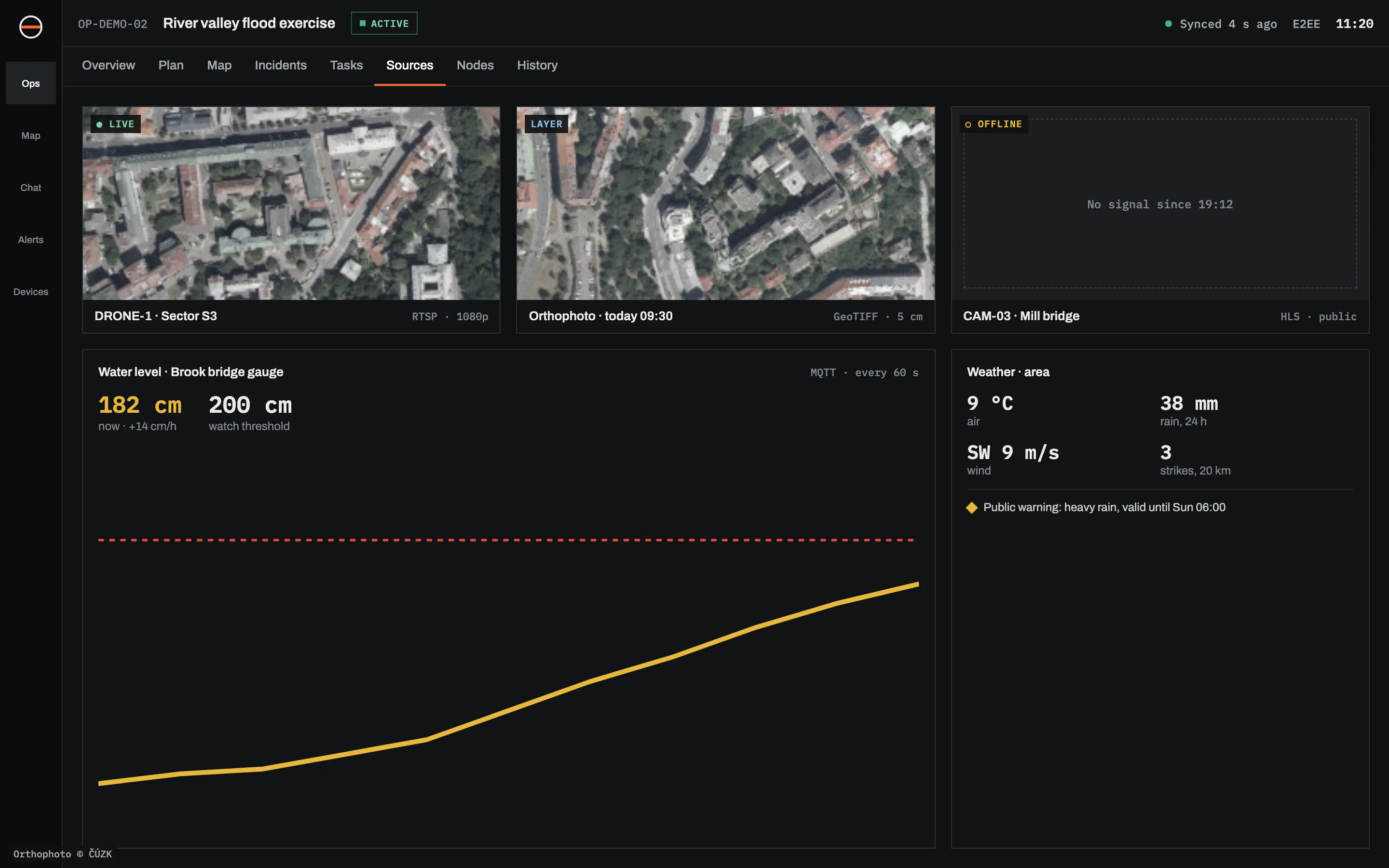
Built around how an on-call station really works.
Who is coming, and as what
Availability and status (responding, in attendance, unavailable) next to each firefighter’s competences, so the officer in charge knows there is an LGV driver and two BA wearers before the bay doors open.
Appliances and equipment
Each appliance with its call sign, stowage and readiness. Pumps, chainsaws and hose with tests, defects and servicing, so nobody plans around a pump that is still in the workshop.
Drill nights and competences
Drills, courses and revalidations with reminders before something lapses, and a matrix of who is in date. As useful when planning the training year as on the night of a shout.
Maps that work without signal
Offline maps of your station ground, hydrants and open water supplies as your own layer, and coordinates in WGS 84, UTM or MGRS.
One picture with the council
The council’s emergency planning team joins as a guest and sees the streets, tasks and road closures without ringing the officer in charge.
A record you can hand over
Every report, task, photo and track on one timeline. Replay the night or export it, then complete the incident report from facts.
What Sinkaos does not do for a fire station.
Work stations run in it.
Questions on-call crews ask.
Does every firefighter need a new device?
Can a neighbouring station join an incident?
Does it work when the mobile network is down?
Can we keep equipment and training records in it too?
How does it fit the wider command structure?
Try it on your next drill night.
Early access is free. We will set up your first operation with you, including your appliances and station ground.